




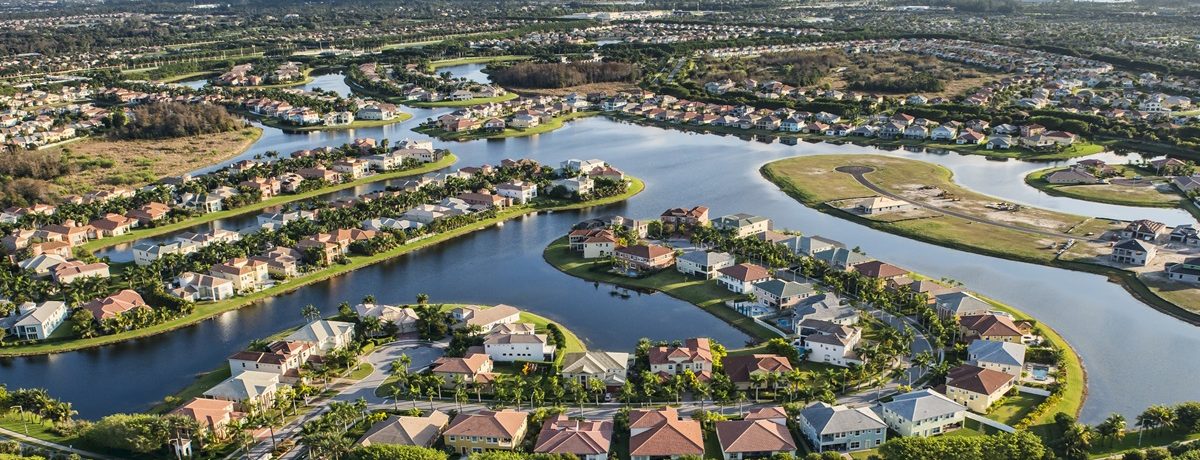
What is Florida community association management? Florida community association management is the professional administration of homeowners associations (HOAs), condominium associations, cooperatives, and other planned communities under Florida law. It covers financial management, compliance with Chapter 718 (Condominium Act) and Chapter 720 (Homeowners Association Act), CAM licensing requirements enforced by the DBPR, and day-to-day operations including dues collection, maintenance coordination, and resident communications.
Legal disclaimer: This guide is for general informational purposes only and does not constitute legal advice. Florida community association law changes frequently. Always consult a licensed Florida attorney for advice specific to your association's situation and governing documents.
Florida has more community associations than any state except California, and it has some of the most active and frequently updated HOA and condominium legislation in the country. For boards, community managers, and anyone entering the Florida community association management profession, understanding the regulatory environment is not optional: it is the foundation of compliant, effective management.
This guide covers the structure of Florida community association management in 2026: the two primary governing statutes, the CAM licensing requirements every professional manager must meet, the major 2024 law changes that are still being implemented, and the practical management obligations that apply to both HOAs and condo associations. For a deeper look at the 2024 law changes specifically, see new HOA laws in Florida and the Florida HB 1203 compliance guide.
Florida's Community Association Landscape in 2026
Florida has approximately 48,000 community associations serving over 9.5 million residents — nearly half the state's population. Nationwide, according to the Community Associations Institute (CAI), 74.2 million Americans live within 358,000 homeowners associations, condominium communities, or housing cooperatives. California and Florida together account for roughly a third of all community associations in the country.
The scale of the industry in Florida is significant. HOA fees in most Florida communities range from $100 to $350 per month for standard associations, rising to $400 to $800 or more for larger communities with extensive amenities including pools, clubhouses, and recreational facilities. For community managers, this financial scale, combined with Florida's active legislative environment, makes professional licensure and ongoing compliance education genuinely consequential.
Florida's housing and rental market context matters for understanding where community associations sit. The state's consistent population growth, driven by migration from higher-cost states, continues to fuel new community development and increase the professional management workload. For current market conditions, see the Florida rental market overview.
Chapter 718 vs. Chapter 720: Florida's Two Primary Community Association Laws
The most important distinction in Florida community association management is understanding which statute governs a given community. Florida has two entirely separate chapters of law for community associations, and they impose meaningfully different obligations on boards, managers, and residents.
Chapter 720: The Florida Homeowners Association Act
Chapter 720 of the Florida Statutes governs homeowners associations — communities that typically consist of individually owned lots with separately owned homes. HOAs formed after 2000 must comply with Chapter 720, including its notice, enforcement, and financial disclosure requirements.
Key Chapter 720 provisions that community managers must know:
• Board governance and meeting notice requirements — HOA boards have more discretion in scheduling and committee formation than condo boards, but must still follow statutory notice requirements.
• Assessment collection procedures — Chapter 720 specifies the process for levying, collecting, and pursuing delinquent assessments, including lien rights.
• Fine limits — An HOA may not fine more than $100 per violation, with an aggregate maximum of $1,000 under Florida Statute 720.305. Notice and a hearing opportunity must be provided before any fine is levied.
• Record access — Members have a statutory right to inspect and copy official association records within a defined period of the request.
• Website requirement (HB 1203, 2024) — HOAs with 100 or more parcels were required to have a website or mobile-friendly platform with required records accessible by January 1, 2025.
The current 2024 version of Chapter 720 is available from the Florida Senate statutes database. For a comprehensive breakdown of the 2024 changes to Chapter 720, see the Florida HB 1203 compliance guide.
Chapter 718: The Florida Condominium Act
Chapter 718 governs condominium associations — communities where owners hold title to individual units while sharing ownership of common elements including hallways, amenities, building infrastructure, and exterior spaces. The association is responsible for maintaining shared structures and common areas.
Chapter 718 is generally more prescriptive than Chapter 720 because of the shared ownership structure. Key areas of stricter regulation include:
• Meeting notice and access — Condo board meetings are subject to more detailed open-access requirements and stricter notice rules than HOA meetings under Chapter 720.
• Reserve funding — Chapter 718 imposes more detailed reserve requirements, including a mandate to conduct Structural Integrity Reserve Studies (SIRS) for buildings three stories or taller. As of January 1, 2025, the DBPR maintains a searchable database of associations that have completed their SIRS.
• Director education — New condo directors must complete a 4-hour educational course within 90 days of election or appointment. Directors must also complete at least 1 hour of continuing education annually.
• Debit card prohibition — Association debit card use for any expense is strictly prohibited under 2024 amendments to prevent embezzlement.
• Website requirement — Condominium associations with 25 or more units must have a compliant website or mobile-friendly platform with required records accessible by January 1, 2026.
Chapter 718 is available from the Florida Legislature statutes database. For the board governance implications of both statutes, see responsibilities and rules for HOA board members.
Key differences at a glance
Florida CAM Licensing Requirements in 2026
Florida is one of the few states that requires community association managers to hold a professional license before providing management services. Licensing is enforced by the Department of Business and Professional Regulation (DBPR), through the Regulatory Council of Community Association Managers.
Who needs a Florida CAM license?
Under Florida Statutes Section 468.432, a CAM license is required for any individual or firm that manages a community association with more than 10 units or with an annual budget of $100,000 or greater, and receives compensation for those services. The license requirement covers condominiums, HOAs, cooperatives, timeshares, mobile home parks, and planned unit developments, per the CAI Florida manager licensing overview. Community association management firms with these thresholds must also hold a separate CAM firm license.
How to obtain a Florida CAM license in 2026
The Florida CAM licensing process involves six steps:
1. Complete 16 hours of DBPR-approved pre-licensure education within 12 months before your exam date. The course is available entirely online through state-approved providers.
2. Submit a license application online to the DBPR. Application processing takes approximately 10 business days.
3. Complete fingerprinting for a Florida Department of Law Enforcement (FDLE) background check. Results are transmitted to DBPR within five business days.
4. Schedule and pass the state CAM exam through Pearson VUE. The exam consists of 100 multiple-choice questions; the passing score is 75%. Exams are available daily at Pearson VUE testing centers; call 888-204-6230 to schedule.
5. Activate your license through the DBPR online account and keep your licensing record current. Managers serving HOAs must update their DBPR profile to indicate they manage homeowners associations.
6. Renew your license every two years by September 30 of even-numbered years. Firm licenses expire September 30 of odd-numbered years.
2024-2026 CAM continuing education update: Florida CAMs managing HOAs are now required to complete 17 total CE hours for the 2024-2026 renewal cycle, up from the standard 15 hours. This includes 5 hours specifically on HOA management topics (such as HOA record access, retention policies, and document formats). CAMs who manage only condominium or cooperative associations, and not HOAs, continue with the standard 15-hour CE plan. The deadline for this cycle is September 30, 2026. Source: DBPR hot topics for community association managers.
Key 2024 Florida Community Association Law Changes
Two major pieces of Florida legislation in 2024 significantly changed the obligations of HOA and condominium associations. Community managers and board members working in Florida need to understand both.
HB 1203 (signed 2024) — HOA transparency and accountability
Florida HB 1203, signed into law in 2024, introduced some of the most significant HOA governance reforms in the state's history. Key provisions affecting community managers include mandatory website requirements (HOAs with 100 or more parcels required a website with specific records accessible by January 1, 2025), enhanced record access rights for homeowners, stronger restrictions on board member conflicts of interest, and new enforcement mechanisms for HOA governance violations.
For a full breakdown of HB 1203 requirements and a three-step compliance framework, see the ManageCasa Florida HB 1203 guide.
SB 382 (signed May 2024) — CAM licensing relief
SB 382, signed by Governor DeSantis in May 2024, reduces regulatory burdens on DBPR license holders by exempting certain licensees from some continuing education requirements under Florida Statute 455.2124. Community managers who qualify for an exemption under this provision are exempt from the additional CE requirements specifically relating to HOAs and recordkeeping. Check the DBPR online portal to determine whether your license qualifies for this exemption.
Chapter 718 structural integrity requirements (2024 implementation)
The structural integrity reserve study (SIRS) requirements that followed the 2021 Surfside condominium collapse continue to roll out through 2024 and 2025. Condominium associations governing buildings three stories or taller are required to complete a SIRS conducted by a licensed engineer or architect. As of January 1, 2025, the DBPR maintains a searchable public database of associations that have completed their SIRS. Associations not on this list may be flagged for non-compliance. Condo associations with 25 or more units must also have a compliant website in place by January 1, 2026. For the full legal context of these requirements, see new HOA laws in Florida.
Financial Management Obligations for Florida Community Managers
Florida community association law imposes specific financial management obligations on both boards and their community managers. Compliance with these requirements is not discretionary, and managers who facilitate non-compliant financial practices expose both themselves and the association to liability.
Reserve fund requirements
Florida law requires community associations to maintain reserve funds for the repair and replacement of major common area components. For condominium associations, the SIRS requirements significantly expand the scope and precision of reserve funding obligations. For HOAs, Chapter 720 requires reserve disclosures in the annual budget but gives boards more discretion in funding levels, provided that any waiver of full funding is approved by a vote of the membership.
For the full reserve funding framework, including how to read a reserve study and set contribution levels that keep your community financially stable, see HOA reserve funds: strategies and state requirements. For budgeting guidance that incorporates reserve contributions, see the HOA budget planning guide.
Accounting and financial reporting
Florida community associations are required to maintain complete financial records and provide homeowners with regular financial reports. Chapter 718 imposes more detailed financial reporting and audit requirements for condominium associations than Chapter 720 imposes on HOAs. Under both statutes, managers have a fiduciary duty to handle association funds accurately and transparently.
For the full accounting framework applicable to Florida community associations, including the chart of accounts structure, required financial statements, and audit obligations, see the HOA accounting complete guide. For financial transparency obligations specific to boards, see HOA financial transparency.
Self-Managed vs. Professional Community Association Management in Florida
Florida community associations have a choice: manage internally with a licensed in-house team, or outsource management to a licensed community association management firm. Both approaches are legal and both can work well, but they carry different obligations and tradeoffs.
Self-managed associations
A self-managed association hires its management team directly as employees of the nonprofit association entity rather than outsourcing to a management company. The managers employed by the association must still hold a valid Florida CAM license if the association has more than 10 units or an annual budget above $100,000. Self-management gives the board more direct control over management decisions and can reduce costs in straightforward communities.
The risks of self-management are real: volunteer boards may lack the professional expertise, time, or institutional knowledge to manage complex financial and legal compliance requirements. Turnover among board members can create gaps in institutional knowledge. And the same person authorizing payments and reconciling accounts creates internal control weaknesses that professional management firms are structured to prevent.
Outsourced management firms
When management is outsourced to a private company, that firm and its designated community association manager must both hold active Florida CAM licenses. The firm is required to notify the DBPR within 30 days of any changes to its designated licensed CAM. The firm must employ at least one licensed CAM at all times, or its firm license becomes invalid.
For a framework to evaluate whether self-management or professional management is right for your Florida community, see HOA self-management vs. property management: key pros and cons. For the operational practices that distinguish well-run communities in either model, see property management tips: 15 proven strategies.
Florida HOA Management: Regional Context
Florida is not one market. Community association management in Miami-Dade operates very differently from management in the Panhandle, and both are different from the rapid-growth communities of Central Florida. Understanding the regional context helps managers and boards calibrate expectations appropriately.
South Florida: Miami-Dade, Broward, Palm Beach
South Florida has the highest concentration of condominium associations in the state, particularly in Miami-Dade and Broward counties. The Surfside collapse in 2021 and the subsequent legislative response have made structural integrity compliance a first-priority issue for condo boards throughout the region. Insurance costs in South Florida are significantly above the state average due to hurricane exposure and insurer market contraction, creating serious budget pressure for many associations.
Central Florida: Orlando, Tampa, Sarasota
Central Florida has seen some of the fastest community association growth in the country as population migration from northern states accelerates. Orlando, Tampa, and Sarasota metro areas all have large and growing HOA communities, particularly in master-planned suburban developments. The professional management market in this region is competitive, with high demand for licensed CAMs who can manage growing portfolios efficiently.
Northeast Florida: Jacksonville
Jacksonville and the surrounding Northeast Florida region have a significant HOA presence driven by single-family suburban development. The community association management market here tends to involve larger planned unit developments and master associations rather than high-rise condominiums. Chapter 720 compliance and HOA governance are the primary focus for most managers in this region.
Florida Community Association Management: Quick Reference
The Bottom Line
Florida has one of the most active community association regulatory environments in the country. Chapter 718 and Chapter 720 impose different, specific obligations on boards and managers. The CAM licensing requirements are enforced, the CE requirements have tightened, and the 2024 legislative changes are still being implemented across the state's 48,000 associations.
For Florida community managers, staying current on DBPR requirements, the evolving statute obligations under both Chapter 718 and 720, and the practical management challenges of a growing and legally demanding industry is genuinely necessary — not optional. The compliance environment rewards preparation.
For other state HOA management guides in the Southeast, see HOA management in Tennessee, HOAs in Georgia, North Carolina community associations, and South Carolina community associations. For the accounting and financial management framework that underlies compliant Florida HOA operations, see the HOA accounting complete guide.
Frequently Asked Questions
Who needs a Florida CAM license?
Anyone managing a Florida community association with more than 10 units or a budget above $100,000 for compensation must hold a valid Florida CAM license issued by the DBPR.
What is the difference between Chapter 718 and Chapter 720 in Florida?
Chapter 718 governs Florida condominium associations, while Chapter 720 governs homeowners associations. Condo laws are generally stricter regarding reserves, meetings, inspections, and governance requirements.
What are the Florida CAM continuing education requirements for 2026?
Florida CAMs managing HOAs must complete 17 continuing education hours by September 30, 2026. CAMs managing only condos or cooperatives typically follow a 15-hour requirement.
What did HB 1203 change for Florida HOAs?
Florida HB 1203 added website requirements, stronger homeowner record access rights, conflict-of-interest restrictions, and new enforcement standards for HOA governance compliance.
Do self-managed Florida HOAs need a CAM license?
Yes, if compensated management services are provided for associations exceeding 10 units or $100,000 annual budgets. Volunteer board members managing without compensation are exempt.

Expert in Property Management and SaaS
Peter Koch is an expert in property management and SaaS, focused on building top digital tools for property managers and growing technology-driven startups. He specializes in enhancing property management operations through smart software solutions that streamline accounting, automate workflows, and improve community communication. Peter writes about HOA management technology, proptech innovation, and scalable SaaS strategies designed to help modern property professionals operate more efficiently.