


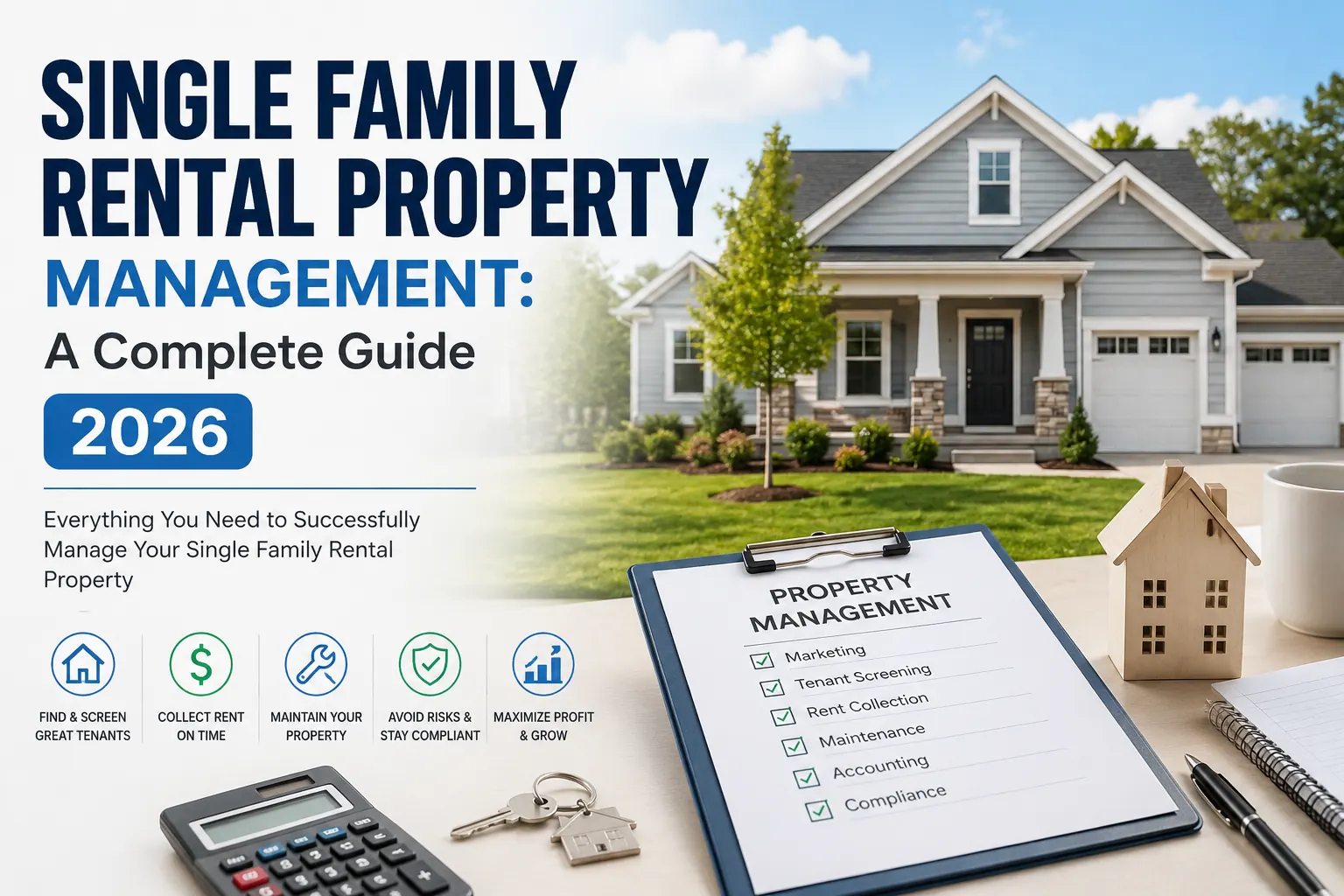
What is Single Family Rental Property Management?
Single family rental property management covers all the responsibilities involved in renting out a detached house, townhome, or duplex: marketing the property, screening tenants, executing leases, collecting rent, handling maintenance, managing tenant relationships, and ensuring legal compliance with applicable landlord-tenant law. Property managers for single family homes may work as independent landlords self-managing their own properties or as professional property management companies managing homes on behalf of owners.
Single family rentals represent approximately 16 million units and roughly 35% of all rental households in the United States, according to the US Census Bureau's Housing Vacancies and Homeownership Survey. That scale makes single family rental property management one of the most common and most economically significant segments of residential property management.
Managing single family homes presents challenges that differ from multifamily and apartment management: properties are geographically dispersed, each unit typically has its own maintenance systems, and tenant turnover is more expensive per unit than in a concentrated apartment complex. Getting the management fundamentals right matters more at the single family scale than almost anywhere else in residential property management.
US Census Bureau Housing Vacancies and Homeownership Survey
What Single Family Rental Property Management Involves
Single family property management covers the full lifecycle of a tenancy, from preparing the property and marketing the vacancy through tenant selection, lease execution, ongoing management, and eventual tenant turnover. Here is what each stage involves.
Marketing and Vacancy Management
Effective vacancy marketing for single family homes involves professional photography, accurate property descriptions, listing distribution across major rental platforms, and prompt response to inquiries. Single family renters typically search on Zillow, Apartments.com, Realtor.com, and Zumper. Properties with high-quality photos and detailed listings receive significantly more qualified inquiries than those without.
Time on market directly affects return on investment for single family rentals. An empty property generates no income while fixed costs — mortgage, insurance, property taxes, utilities — continue. The goal is to price accurately for the market, present the property well, and convert inquiries to qualified applications quickly.
Tenant Screening
Tenant screening for single family homes deserves particular care. Single family tenants typically sign longer leases, use more of the property's systems, and have more impact on property condition than apartment tenants. A poor screening decision in a single family context has higher financial consequences than in a multifamily building.
Effective screening covers credit history, income verification (typically 2.5-3x monthly rent), rental history verification, and background screening for eviction history. All criteria must be applied consistently to every applicant to comply with fair housing law. Document every screening decision.
For a step-by-step tenant screening framework, see how to screen tenants: 6 essential steps.
Lease Agreements
Single family lease agreements need to address property-specific provisions that rarely appear in apartment leases: lawn care responsibility, snow removal, HVAC filter replacement, pest control, and appliance maintenance. Clarifying these responsibilities in writing at the start of the tenancy prevents the most common disputes at the end.
The lease should specify who maintains what, what requires landlord approval, what constitutes tenant damage vs. normal wear and tear, and the process for maintenance requests. State landlord-tenant law governs what leases can and cannot require, with significant variation across states.
For lease terms and provisions specific to residential tenancies, see rental agreements and lease terms guide.
Rent Collection and Accounting
Online rent collection is now the standard expectation for single family tenants, the majority of whom prefer ACH autopay or card payment. Cash and check collection creates manual handling risk, banking delays, and reconciliation overhead. Transitioning to an online collection platform reduces both administrative burden and late payment rates.
Single family property accounting covers rental income, security deposit management, maintenance expenses, property management fees (if using a company), insurance premiums, property tax payments, and capital improvement tracking. Organized records are essential for tax filing, particularly for Schedule E rental income reporting.
Maintenance and Property Condition
Single family homes have more surface area and more independent systems than apartment units: HVAC, plumbing, electrical, roof, gutters, exterior, landscaping. Each system requires periodic maintenance and eventual replacement. Deferred maintenance on a single family home compounds quickly and reduces property value.
Responsive maintenance is one of the strongest drivers of tenant retention in single family rentals. Tenants who report problems and see them addressed promptly renew leases at higher rates than those who feel ignored. A documented maintenance request system, consistent response time standards, and reliable contractor relationships are the operational foundation of good single family property management.
Legal Compliance
Single family landlords must comply with applicable federal, state, and local landlord-tenant law: fair housing requirements, habitability standards, security deposit rules, eviction procedures, and disclosure obligations. Requirements vary significantly by state and sometimes by city or county within a state. Landlords managing in multiple states must track each jurisdiction's specific requirements independently.
For a framework on landlord legal obligations, see landlord duties and tenant responsibilities. For tenant rights that landlords must respect, see essential tenant rights and rental owner obligations.
Self-Managing vs. Hiring a Single Family Property Management Company
The decision between self-managing a single family rental and hiring a professional property management company is one of the most significant choices a rental property owner makes. There is no universal right answer — it depends on your time, geography, portfolio size, and management skills.
Self-management works best for landlords with properties close to home, time available for tenant communication and maintenance coordination, some knowledge of landlord-tenant law in their state, and a reliable contractor network. As portfolio size grows or properties become more geographically dispersed, the case for professional management strengthens.
How to Find Single Family Property Management Companies
The search for a property management company for single family homes is where the +22% year-over-year growth in 'property management companies for single family homes' search volume is concentrated. Owners who have decided to hire professional management need to find, evaluate, and select the right firm.
What to Look for in a Single Family Property Management Company
• Single family focus: Some property management companies specialize in single family homes. Others focus on apartments and multifamily. The operational requirements are different enough that specialization matters — look for companies with a track record in single family management specifically.
• Local market knowledge: Property management is intensely local. A company that knows your neighborhood, understands local rent levels, has relationships with local contractors, and understands local court procedures for eviction is worth more than a large national brand with generic processes.
• NARPM membership: The National Association of Residential Property Managers certifies property managers and sets professional standards. NARPM members are required to adhere to a code of ethics. An MPM (Master Property Manager) or RMP (Residential Management Professional) designation indicates formal professional training.
• Transparent fee structure: Management fees for single family homes typically run 8-12% of monthly collected rent, with a leasing fee of 50-100% of one month's rent when a new tenant is placed. Ask about maintenance markup fees, inspection fees, and any other charges beyond the base management fee.
• Owner portal and reporting: You should be able to see your property's financials, maintenance history, and tenant communications at any time without calling the management company. A real-time owner portal is a baseline expectation from any professional management firm in 2026.
• Maintenance response standards: Ask specifically how the company handles emergency maintenance, what their contractor network looks like, and how quickly routine maintenance requests are typically resolved. Deferred maintenance is the most common complaint about property management companies.
National Association of Residential Property Managers (NARPM)
Questions to Ask Before Hiring
• How many single family homes do you currently manage in this market?
• What is your average vacancy period when a tenant vacates?
• What is your tenant retention rate — what percentage of tenants renew their lease?
• How do you screen tenants, and what are your minimum screening standards?
• What is your eviction rate, and how do you handle non-payment situations?
• What software do you use, and will I have direct access to my property's data?
• What happens if I am unhappy with the service — what is the termination clause?
Single Family Rental Management Challenges and How to Address Them
Tenant Turnover Costs
Turnover is the single largest variable cost in single family rental property management. When a tenant vacates, the typical costs include cleaning, painting, minor repairs, carpet cleaning or replacement, leasing marketing costs, and lost rent during vacancy. For a single family home, these costs commonly run one to two months of rent.
The best protection against high turnover costs is tenant retention. Responsive maintenance, reasonable lease renewal terms, and professional tenant communication all contribute to tenants choosing to stay. A tenant who renews a lease for a third year is saving the landlord several thousand dollars in turnover costs compared to finding a new tenant.
Maintenance Cost Management
Single family homes have more maintenance exposure than apartments because each home has its own HVAC system, roof, water heater, and exterior. An apartment building shares many of these systems across multiple units. The result is that per-unit maintenance costs for single family rentals are typically higher than for comparable apartment units.
The mitigation is preventive maintenance. Annual HVAC servicing, gutter cleaning, roof inspections, and plumbing checks catch problems before they become emergencies. Emergency repairs cost significantly more than scheduled maintenance, and the disruption to the tenant relationship from an emergency is itself a retention risk.
For more guidance on landlord maintenance obligations, see landlord duties and tenant responsibilities.
Security Deposit Management
Security deposit disputes are consistently among the most common post-tenancy conflicts in single family rentals. The deposit amount, the move-in condition documentation, and the deduction process at move-out all need to follow a documented procedure that complies with your state's specific deposit rules.
The most common mistake is inadequate move-in documentation. A signed move-in inspection report with timestamped photographs of every room is the foundation of any legitimate deduction claim at move-out. Without it, the tenant's account of pre-existing damage is difficult to counter.
For a complete guide to security deposit rules and return procedures by state, see the rental security deposit guide.
Common Tenant Disputes
The most frequent disputes in single family rental management fall into predictable categories: maintenance response time, security deposit deductions, lease renewal terms, unauthorized modifications to the property, and pet damage. Most disputes are preventable with clear lease language, documented procedures, and consistent enforcement.
For strategies on managing the most common landlord-tenant disputes, see common disputes between tenants and rental owners.
Single Family Rental Property Management in 2026: Market Context
The single family rental market in 2026 reflects several intersecting trends that affect how managers operate and what tenants expect.
• Ownership affordability is driving rental demand: With mortgage rates above 6.5% in 2026 and median home prices elevated in most US markets, homeownership remains out of reach for a large share of households. Many of these households are renting single family homes as a substitute for ownership, often bringing with them higher income levels and longer-term lease commitments than traditional apartment renters.
• Tenant expectations have shifted: Single family renters in 2026 expect online rent payment, digital maintenance requests with tracking, fast response times, and professional-grade communication. Self-managing landlords who operate from spreadsheets and cash checks face increasing friction with this tenant cohort.
• Built-for-rent is expanding supply: Institutional developers have added significant single family rental supply through built-for-rent (BFR) communities in Sun Belt and secondary markets. Professional management company competition has intensified in markets with concentrated BFR activity.
• State law continues to evolve: California, Oregon, Colorado, and New York have enacted or extended rent stabilization and just-cause eviction protections that affect single family landlords. The trend toward stronger tenant protections is ongoing, requiring landlords to stay current on applicable state law in every market where they operate.
Related Guides for Single Family Landlords and Property Managers
• How to Screen Tenants: 6 Essential Steps
• Rental Agreements and Lease Terms Guide
• Rental Security Deposit Guide
• Landlord Duties and Tenant Responsibilities
• Essential Tenant Rights and Rental Owner Obligations
• Common Disputes Between Tenants and Rental Owners
• 22 Tips for First-Time Rental Property Owners
Managing Your Single Family Rental Portfolio
Single family rental property management across multiple homes requires organized systems for rent collection, maintenance tracking, lease management, and owner reporting. Purpose-built rental management tools help landlords and property managers handle the administrative workload without manual overhead.
Explore rental management features and pricing, or visit ManageCasa.com to learn more.
Frequently Asked Questions
What does a property manager for a single family home do?
A property manager handles tenant screening, lease administration, rent collection, maintenance coordination, property inspections, and tenant communications. They help owners reduce day-to-day workload while ensuring the property remains occupied, maintained, and compliant with applicable landlord-tenant laws.
How much does single family property management cost?
Single-family property management typically costs 8% to 12% of monthly rent, plus leasing fees when placing new tenants. Additional charges may apply for inspections, lease renewals, maintenance coordination, or other specialized services depending on the management agreement.
Is it worth hiring a property management company for a single family rental?
Hiring a property management company can be worthwhile for owners with multiple properties, limited availability, or out-of-area rentals. Professional management saves time, improves compliance, and reduces operational burdens, though owners should weigh fees against potential benefits and cost savings.
What is the difference between single family and multifamily property management?
Single-family property management focuses on individual homes with separate tenants and systems. Multifamily management oversees multiple units within one property, benefiting from shared infrastructure, centralized maintenance, and greater operational efficiencies.
What are the biggest challenges in single family rental property management?
Common challenges include tenant turnover, maintenance coordination, legal compliance, vacancy costs, and security deposit disputes. Effective tenant screening, proactive maintenance planning, and strong tenant retention strategies help reduce expenses and improve long-term rental performance.

Content Writer
Dann is a real estate and property management content strategist specializing in HOA operations, financial management, and community governance. He works closely with industry professionals to produce accurate, practical guidance for property managers and HOA boards.