




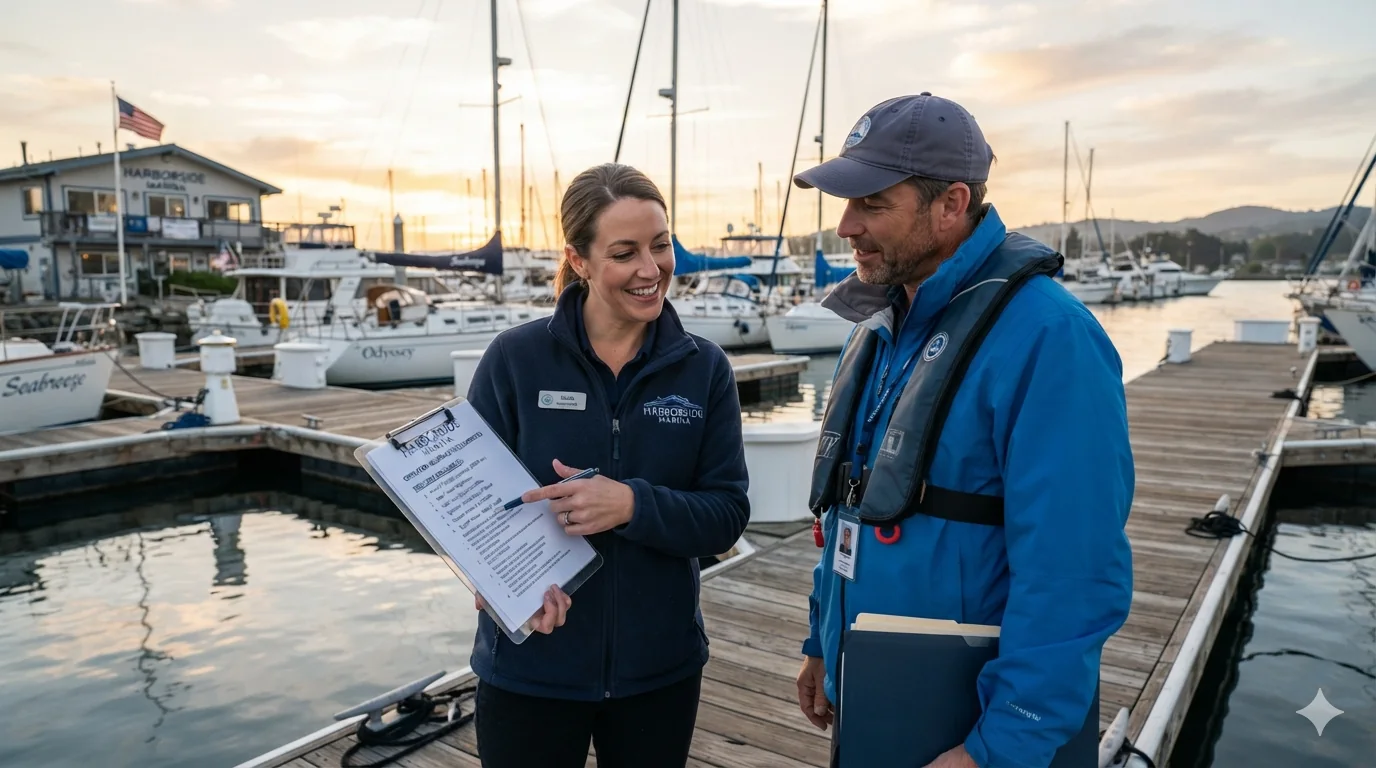
Marina insurance is a set of commercial policies for marina operators. It helps cover liability, property damage, and pollution risk tied to work on navigable water. A typical program blends marina operators legal liability (MOLL), general liability, dock insurance for slips and piers, property cover for buildings, and pollution liability. Many owners search for boat slip insurance, but the real need is a broader mix that also includes marina liability insurance and, in some cases, protection and indemnity insurance.
This article provides general educational information about marina insurance and is not insurance or legal advice. Coverage needs vary by marina size, location, and operations. Consult a licensed marine insurance broker or agent to confirm the right cover for your marina.
Why Standard Commercial Insurance Falls Short
Most commercial general liability policies are built for land-based businesses. A marina works on navigable water, holds customer property worth more than a normal retail stock, and faces risks like fuel spills, dock collapse, and vessel damage that a standard policy was not built to handle. When an incident happens on or over navigable water, federal maritime law can apply instead of state liability rules. That means different standards, different defenses, and different claims steps than most owners expect.
Those marina insurance requirements are why the coverage stands on its own, built around ocean marine and inland marine policies rather than a basic business owner's policy.
Marina Operators Legal Liability (MOLL)
Marina operators legal liability, or MOLL, is the core policy that sets marina insurance apart from ordinary commercial cover. It protects a marina when a customer's boat is damaged while in the marina's care, custody, or control, whether during storage, hauling, launching, or dockage.
This matters because standard general liability policies usually exclude property in a business's care, custody, or control. Without MOLL, a marina has no coverage if a customer's vessel is damaged by a crane fault during haul-out or if a lift failure drops a boat. Since one vessel can be worth more than all other insured property at the marina, most owners keep MOLL even when not required by contract.
General Liability and Property Coverage
Marina liability insurance, apart from MOLL, means commercial general liability coverage tuned to marina risks. It handles bodily injury and property damage claims from daily work: a slip on a wet dock, a trip on uneven pavement, or a customer's car hit in the parking lot.
Property insurance covers the marina's own assets: docks, piers, buildings, fuel systems, and equipment. Losses can come from fire, storms, vandalism, and theft. Some owners call this boat dock insurance, but it is really part of a wider marina property plan. Because docks and piers are costly to rebuild and often custom-built for one site, their replacement cost should be reviewed often, not left at the first policy figure.
Protection and Indemnity (P&I) Insurance
Protection and indemnity insurance, often called P&I or ocean marine liability, is another marine cover. It helps with liability for bodily injury or property damage tied to vessel operation. According to IRMI's insurance definitions reference, P&I and MOLL are related but not the same. P&I covers broader marine liability, while MOLL covers liability for vessels in the marina's direct care, custody, or control. A marina with fueling, boat rental, or charter work often needs both.
Environmental and Pollution Liability
Marinas that fuel vessels, store fuel on site, or do engine work face real pollution risk. A single spill can trigger cleanup costs, fines, and third-party claims that standard general liability excludes. Environmental and pollution liability covers containment, cleanup, and legal defense tied to a spill event.
This coverage can matter even for marinas that do not sell fuel directly, because stored fuel, oil changes, and routine engine work still create spill risk.
Workers' Compensation: A Common Misconception
Most marina operators assume their staff automatically fall under federal maritime workers' comp law. That is usually not true. The U.S. Department of Labor's LHWCA FAQ specifically excludes marina workers from Longshore and Harbor Workers' Compensation Act coverage unless they are building, replacing, or expanding the marina itself rather than doing routine work. In practice, most dockhands, office staff, and maintenance workers are covered by state workers' compensation instead of the federal maritime system.
The exemption exists because Congress built the LHWCA around longshore and shipbuilding work, not leisure marina work, according to a Congressional Research Service overview of the law. Marina operators should confirm the correct cover with their insurance agent rather than assume one system applies by default. A misread can leave a real gap if a claim is filed under the wrong program.
Additional Coverage Types
Hurricane and Storm Coverage: What Gets Missed
Docks and piers face some of the highest storm exposure of any insured structure, and coverage gaps here are common.
Standard property policies usually exclude flood damage, so separate flood cover is often needed. Even when flood cover exists, it may still exclude wave action or storm surge in ways that differ from wind damage.
Liability for boats damaged during a storm is usually more limited than owners expect. In most marina agreements, storm and weather damage to a stored vessel is treated as outside the marina's control. General liability or MOLL does not respond unless the marina's own negligence, such as poor tie-downs, helped cause the loss.
Marinas in hurricane-prone regions should ask their carrier where wind, flood, and named-storm deductibles apply. These deductibles are often set apart from the normal property deductible and can be much higher after one event.
Common Marina Insurance Coverage Gaps
Next Steps
Keeping insurance files, vessel records, and incident logs organized gets harder as a marina grows.
The platform gives marina operators centralized document management and reporting so coverage reviews and claims don't start with a scramble through email and spreadsheets. See how it works on the marina management platform, or check current pricing. Learn more at ManageCasa.
Frequently Asked Questions
What insurance does a marina need?
Most marinas need a mix of marina operators legal liability (MOLL), general liability, property cover for docks and buildings, and pollution liability. Those are the core marina insurance requirements for most operators. Larger marinas with fueling, boat rentals, or charter operations typically add protection and indemnity (P&I) coverage and a marine umbrella policy on top of these core lines.
What is marina operators legal liability (MOLL) insurance?
MOLL is specialized cover that protects a marina when a customer's vessel is damaged while in the marina's care, custody, or control, such as during storage, hauling, or launching. Standard general liability policies exclude this exposure entirely, which is why MOLL exists as its own distinct coverage line rather than an add-on to a typical commercial policy.
Is protection and indemnity insurance the same as MOLL?
No. P&I covers broader marine liability tied to vessel operation, while MOLL covers liability for vessels directly in the marina's care, custody, or control. Marinas with fueling or charter work usually need both, since each policy responds to a different type of claim and neither one substitutes for the other in a serious incident.
Are marina employees covered under federal maritime workers' compensation?
Usually not. The Department of Labor's LHWCA specifically excludes marina workers from federal coverage unless they are building, replacing, or expanding the marina. Most staff fall under standard state workers' compensation instead. Marina operators should confirm the correct classification with their insurance agent, since applying the wrong system can leave a real gap if an injury claim is filed.
Does marina insurance cover storm and flood damage?
Only partly, and often not by default. Standard property policies usually exclude flood damage, requiring a separate flood policy, and liability for storm damage to a customer's boat is usually limited unless marina negligence played a role. Marinas in storm-prone regions should confirm exactly where wind, flood, and named-storm deductibles apply before a claim ever happens.

Content Writer
Dann is a real estate and property management content strategist specializing in HOA operations, financial management, and community governance. He works closely with industry professionals to produce accurate, practical guidance for property managers and HOA boards.