




What is landlord and tenant insurance?
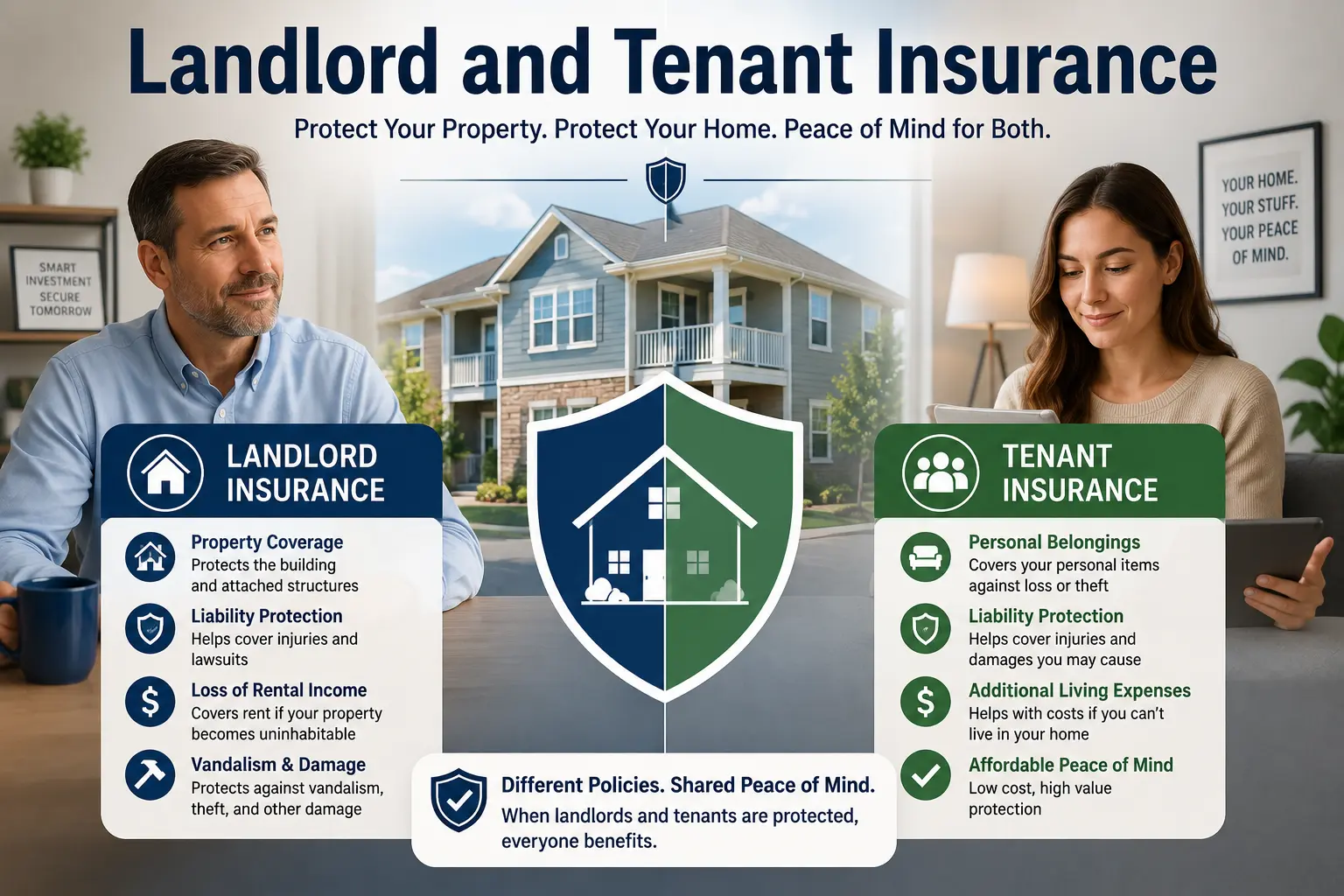
Landlord and tenant insurance are two separate policies that protect different parties in a rental relationship. Landlord insurance covers the building, the owner's liability, and lost rental income. Tenant insurance, commonly called renters insurance, covers the tenant's personal belongings, personal liability, and temporary housing costs. Neither policy covers what the other is designed to protect.
Most disputes about what insurance covers in a rental property come from the same misunderstanding: landlords assume their policy protects the tenant's belongings, and tenants assume the building coverage extends to them. It doesn't work either way. Landlord insurance and renters insurance are built for entirely different risks, and a well-run rental relationship typically requires both. Resolving these ambiguities before they become disputes is one of the practical challenges covered in the HOA management challenges guide.
This guide explains what each policy covers, what it doesn't, where they overlap, and what landlords can legally require of tenants. It also covers the specialized coverage types that matter for specific situations: loss of rent, liability-to-landlord policies, and short-term rental insurance.
Landlord Insurance vs. Renters Insurance: The Core Difference
The simplest way to understand both policies is to think about ownership. Landlord insurance protects what the landlord owns: the building, any fixtures, and the owner's financial exposure if something goes wrong on the property. Renters insurance protects what the tenant owns: their furniture, electronics, clothing, and other personal property, plus their personal liability if they accidentally injure someone or damage the property.
Why Isn't a Standard Homeowners Policy Enough?
Many new landlords assume their existing homeowners policy will automatically extend to a property they start renting out. This is one of the most common and costly mistakes in property ownership. Homeowners insurance is underwritten for owner-occupied residences, and most policies contain explicit exclusions for "business activity," a category that renting to a tenant typically falls under.
Consider a common scenario: a homeowner converts a spare property into a rental and keeps the original homeowners policy in place, assuming it still applies. A tenant is injured on the property, or a kitchen fire causes significant damage. When the claim is filed, the insurer denies it, citing the unapproved change in occupancy and use. The owner is left covering repair costs, liability claims, and lost rental income entirely out of pocket, in some cases amounting to tens of thousands of dollars.
Landlord Insurance vs. Homeowners Insurance: Key Differences
The core distinction is purpose. Homeowners insurance protects a primary residence. Landlord insurance is a distinct product built around the specific risks of renting: tenant liability, extended vacancy, loss of income during repairs, and a higher likelihood of property damage from turnover. Landlords who skip this step aren't just underinsured, they often have no valid coverage at all for a rental-related claim.
What Landlord Insurance Covers
Landlord insurance, also called a landlord policy or rental dwelling policy, is designed for property owners who rent their homes or units to tenants. A standard homeowners policy typically excludes or limits coverage for rental activity, so landlords need a separate policy that accounts for the specific risks that come with having tenants. The Insurance Information Institute provides a breakdown of what standard dwelling policies include and where they stop.
Understanding landlord insurance is also essential context for boards and managers weighing professional versus self-managed rental operations. The self-management vs. professional management guide covers the broader financial and liability responsibilities that come with each approach.
Building and structure coverage
The core of any landlord policy is dwelling coverage: protection for the physical building against fire, storm damage, vandalism, burst pipes, and other covered perils. This typically includes the roof, walls, floors, built-in appliances, and permanent fixtures. It does not cover the tenant's personal belongings or furnishings they bring to the property.
Landlord liability insurance
Landlord liability insurance covers legal and medical costs if the owner is found responsible for an injury on the property. This is crucial coverage, as liability claims can be financially devastating. Common scenarios include:
- A visitor tripping on a cracked sidewalk or a loose carpet in a common area.
- A tenant's child getting injured on old playground equipment on the property.
- A tenant falling on an icy, unsalted walkway during winter.
- A faulty wiring issue, which the landlord knew about but didn't fix, causing a fire that injures a tenant.
Liability coverage pays for the legal defense and any settlement or judgment, up to the policy limit. Most policies start at $100,000, but many landlords opt for $500,000 or more and often add a separate umbrella policy for multi-million dollar protection.
Loss of rent coverage
Loss of rent insurance, also called rental income insurance or loss of rental income coverage, reimburses the landlord for rental income lost when the property becomes uninhabitable due to a covered event. If a fire forces tenants out for three months during repairs, the policy covers the rent the owner would have collected. This is a distinct coverage from liability, and its limits and conditions vary by policy. For a broader look at how landlords manage financial exposure across their portfolios, see the HOA financial management guide.
Landlord contents coverage
If the landlord provides appliances, furniture, or other contents as part of the rental, a landlord contents extension covers those items. This is separate from the tenant's personal property and only covers items owned by the landlord.
What landlord insurance does not cover
While landlord insurance is comprehensive, it's crucial to understand what it typically doesn't cover. Standard policies almost always exclude:
- Tenant's Personal Property: Your policy covers the building, not your tenant's furniture, electronics, or other belongings.
- Equipment Breakdowns: The failure of a major system like an HVAC or appliance due to mechanical issues is usually not covered.
- Routine Maintenance: Costs for regular upkeep, pest control, and fixing normal wear and tear are the landlord's operational expenses.
- Flood Damage: Damage from flooding requires a separate policy from the National Flood Insurance Program (NFIP) or a private insurer.
- Earthquake Damage: Like flooding, earthquake coverage must be purchased as a separate policy or endorsement.
- Tenant Non-Payment of Rent: If a tenant stops paying rent, a standard landlord policy will not cover the lost income. This risk is covered by a separate product called Rent Guarantee Insurance.
How Much Does Landlord Insurance Cost?
While the average cost of landlord insurance ranges from $1,000 to $3,000 annually, your specific premium will depend on several key factors. Insurers assess the property's risk profile based on:
- Property Location: Rates vary significantly based on state, city, and even neighborhood, with areas prone to natural disasters (hurricanes, wildfires) costing more.
- Property Age and Construction: Older buildings or those with outdated electrical or plumbing systems may have higher premiums.
- Number of Rental Units: A multi-family building will cost more to insure than a single-family home.
- Coverage Amount and Deductible: Higher coverage limits and lower deductibles will increase the premium.
- Claim History: A history of prior claims can lead to higher rates.
- Safety and Security Features: Discounts are often available for properties with fire alarms, sprinkler systems, and security systems.
What Renters Insurance Covers
Renters insurance, also called tenant insurance, protects the tenant rather than the property owner. Because a tenant has no insurable interest in the building itself, their coverage focuses on three areas: personal property, personal liability, and additional living expenses. The Consumer Financial Protection Bureau offers a plain-language overview of what renters insurance covers that landlords can point tenants toward when requiring the policy.
Personal property coverage
Personal property coverage reimburses the tenant for belongings that are stolen, damaged by fire, or lost due to other covered perils. This includes furniture, electronics, clothing, kitchen appliances, and valuables up to the policy's sub-limits. Renters insurance typically covers personal property both inside the rental unit and outside it: a laptop stolen from a car is generally covered, as is luggage lost during travel.
Personal liability coverage
Personal liability coverage protects the tenant if they accidentally injure someone or damage someone else's property. If a guest slips and falls in the tenant's unit, or if the tenant accidentally floods the apartment below, liability coverage pays the resulting claim. Most renters insurance policies include between $100,000 and $300,000 in personal liability coverage. This is the coverage most relevant to the landlord-tenant relationship, since it protects the landlord's property from accidental tenant damage.
Additional living expenses
If a covered event, such as a fire, makes the rental unit temporarily uninhabitable, additional living expenses coverage (also called loss of use coverage) pays for the tenant's hotel bills and increased food costs while they are displaced. This is the tenant-side equivalent of the landlord's loss of rent coverage.
What renters insurance does not cover
Renters insurance is broad, but tenants should be aware of common exclusions, which include:
- The Building Itself: The policy covers the tenant's belongings, not the physical structure (walls, floors, fixtures), which is the landlord's responsibility.
- Flood Damage: Requires a separate flood insurance policy.
- Earthquake Damage: Requires a separate policy or endorsement.
- Pest Infestations: Damage from bedbugs, termites, or rodents is typically considered a maintenance issue and is not covered.
- High-Value Items: Standard policies have sub-limits for items like jewelry, fine art, and collectibles. To fully cover them, a separate rider or "floater" policy is needed.
- Undocumented Property: You can't claim what you can't prove you owned. A home inventory is essential for a smooth claims process.
Average renters insurance cost
According to the Insurance Information Institute (iii.org), renters insurance costs an average of $15 to $30 per month in the United States, or roughly $180 to $360 per year. Rates vary by state, coverage amount, deductible, and whether the policy is bundled with auto insurance. The National Association of Insurance Commissioners (NAIC) also publishes a consumer guide to renters insurance that covers coverage options and how to compare policies.
Liability to Landlord Insurance: What It Is and When Tenants Need It
Some landlords require a specific form of tenant coverage called liability-to-landlord insurance as a condition of the lease. This is distinct from standard renters insurance personal liability coverage. Liability-to-landlord coverage is specifically designed to cover accidental damage the tenant causes to the rental property itself, which standard renters insurance personal liability may not cover because the tenant does not own the property.
In practice, many renters insurance policies include coverage for accidental damage to the landlord's property as part of their liability section, but the language varies. Landlords should verify what is actually included in the tenant's policy before accepting it as compliant with the lease requirement. For guidance on how to document lease requirements and compliance tracking, see the HOA rules and regulations guide.
Rent Guarantee Insurance and Loss of Rent Coverage for Landlords
Two coverage types are often confused with each other but address entirely different risks.
Loss of rent insurance
Loss of rent insurance is triggered when the property becomes physically uninhabitable due to a covered event, such as a fire or major water damage. The landlord cannot collect rent because the property cannot be occupied. This coverage is typically included as part of a comprehensive landlord insurance policy.
Rent guarantee insurance
Rent guarantee insurance, also called tenant default insurance or rent protection insurance, covers the landlord when the property is habitable but the tenant stops paying rent. It is not triggered by physical damage; it is triggered by financial default. This is a separate product, not typically included in standard landlord policies, and it often requires tenant referencing or credit checking as a condition of coverage. Search interest in rent protection insurance has grown sharply in recent months, reflecting increasing landlord concern about rent default risk.
For landlords managing multiple properties, understanding which of these coverages applies to a given situation is critical. Loss of rent coverage does not help when a tenant withholds rent; rent guarantee insurance does not help when a fire shuts the property down.
Landlord Insurance for Short-Term Rentals
Standard landlord policies are built for long-term tenancies and typically view short-term renting, such as through Airbnb or VRBO, as a commercial or "hotel-like" business activity. This is a common exclusion, and relying on a standard policy for a short-term rental can lead to a denied claim. To be properly covered, landlords generally have three main options:
- Home-Sharing Endorsement: Some insurers offer a rider or endorsement that can be added to an existing homeowners or landlord policy to cover occasional short-term rentals.
- Specialized Short-Term Rental Policy: These are commercial insurance policies designed specifically for the unique risks of short-term rentals, including property damage, liability, and loss of income.
- Platform Insurance: Platforms like Airbnb offer host protection (such as AirCover), but this should be treated as secondary coverage. It often has significant gaps, particularly for the landlord's own property damage, and should not replace a dedicated insurance policy.
Can a Landlord Require Tenants to Have Renters Insurance?
Yes, in most US states and Canadian provinces, landlords can require tenants to carry renters insurance as a condition of the lease. The requirement must be stated in the lease agreement before the tenancy begins. For guidance on how lease conditions interact with association rules and governing documents, see the HOA rules and regulations guide.
When requiring renters insurance, landlords typically specify: a minimum liability coverage amount (commonly $100,000), proof of coverage before move-in, and in some cases, that the landlord be named as an additional interested party on the policy so they receive notice if the policy lapses. Requiring the landlord to be named as an additional insured is a higher-level requirement and can affect how claims are handled.
Requiring renters insurance is a key risk management strategy for landlords. The primary benefits include:
- Reduced Landlord Claims: If a tenant negligently causes a fire or water damage, their renters liability coverage is the first line of defense, protecting the landlord from having to file a claim on their own policy and risk a premium increase.
- Coverage for Deductibles: A tenant's liability policy can cover the landlord's policy deductible in the event of a major claim caused by the tenant.
- Screening for Responsible Tenants: Tenants who are willing and able to secure renters insurance often prove to be more financially responsible overall.
- Fewer Disputes: When tenants have their own coverage for personal property, it prevents disputes where they might try to hold the landlord responsible for a loss (e.g., a break-in).
How ManageCasa Supports Rental Property Management
ManageCasa is an HOA and rental property management platform that helps landlords and property managers streamline lease management, tenant communications, maintenance tracking, and financial reporting. Lease compliance requirements, including renters insurance verification, can be tracked and documented through the platform.
See how ManageCasa supports rental property management: https://managecasa.com/rental-management-software
Frequently Asked Questions
What is the difference between landlord insurance and renters insurance?
Landlord insurance protects the property owner: it covers the building, the landlord's liability, and lost rental income. Renters insurance protects the tenant: it covers their personal belongings, personal liability, and temporary accommodation costs. The two policies cover completely different risks and both are typically needed in a rental relationship.
Is a landlord responsible for paying a tenant's renters insurance?
No, a landlord is not responsible for paying a tenant's renters insurance. The tenant takes out and pays for their own policy. A landlord can require that a tenant hold renters insurance as a lease condition, but the cost is the tenant's responsibility.
What does landlord insurance not cover?
Standard landlord insurance does not cover the tenant's personal belongings, routine maintenance, general wear and tear, flood damage, or tenant-caused damage unless a specific malicious or accidental damage extension is included. It also does not cover short-term rental activity without a specific endorsement.
What does renters insurance not cover?
Standard renters insurance does not cover flooding, earthquake damage, pest infestations, the landlord's building or fixtures, or high-value items above the policy sublimit without an additional rider. It also does not cover intentional acts by the tenant.
How much does renters insurance cost on average?
According to the Insurance Information Institute, renters insurance typically costs between $15 and $30 per month in the United States, or roughly $180 to $360 per year. The actual cost depends on coverage amount, deductible, location, and whether the policy is bundled with auto insurance. See: iii.org renters insurance facts.

Sales Leader
Noah Gerboff is a strategic sales leader with deep experience in SaaS, real estate, and lending. He specializes in market-driven insights, sales optimization, and helping organizations scale through data-informed strategies.