




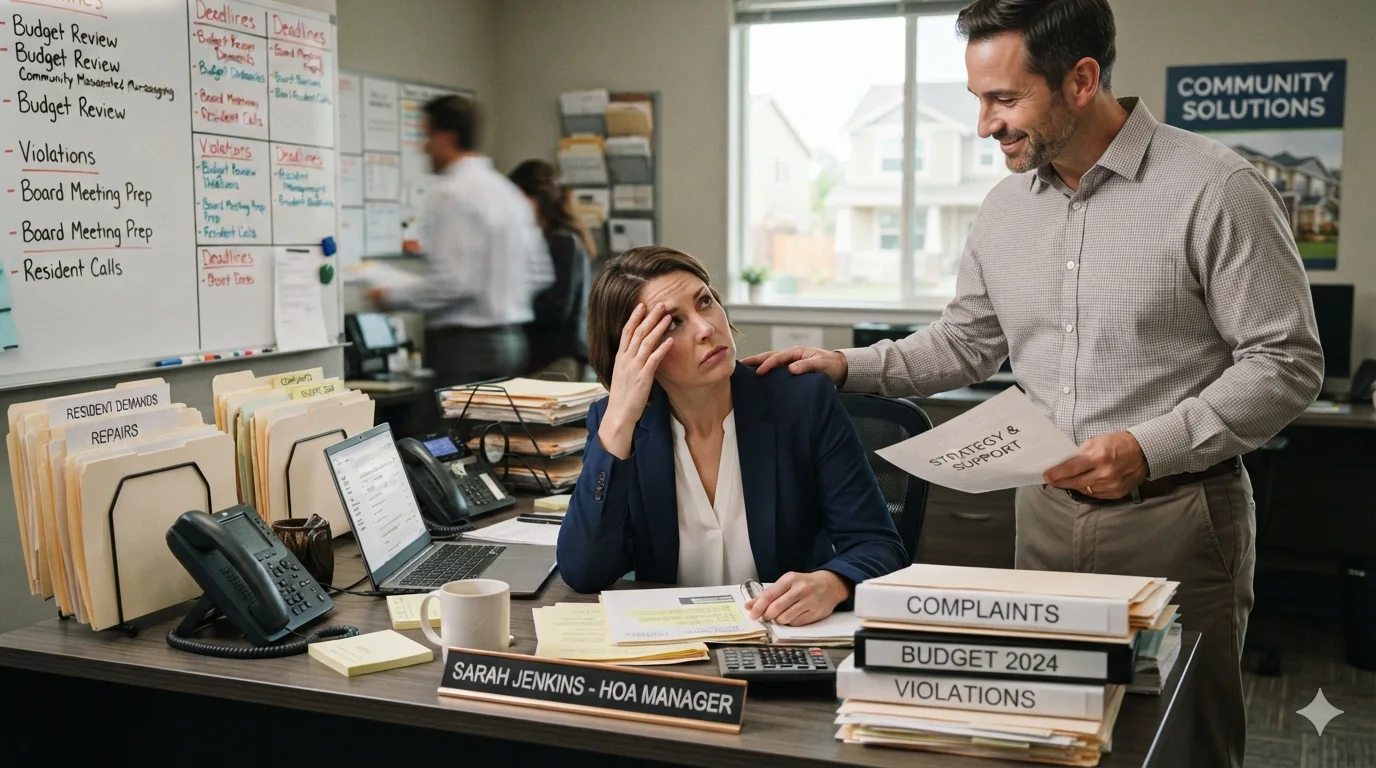
A July 2026 survey of 287 community association professionals adds new detail on HOA manager burnout and community manager retention. It also speaks to emotional intelligence in property management. The results speak directly to HOA manager job stress: 71% reported moderate to severe burnout, and 80% said they have thought about leaving because of stress or emotional strain. Difficult homeowner interactions, board conflict, and heavy workload were the top drivers, while pay, flexibility, and clearer limits were the main fixes.
That is a clear sign of community association manager burnout, not just a bad week at work. Anyone tracking property manager burnout will see the same pattern.
About the Survey
The data comes from a Snap Survey published in July 2026 by the Foundation for Community Association Research, the research arm of Community Associations Institute (CAI). The survey gathered responses from 287 community management professionals across 38 states and Washington, D.C., and was sponsored by Vote HOA Now.
Sixty-six percent of respondents identified as community managers, a role with a broad HOA manager job description that we break down in our guide to the professional HOA manager's role. The rest were management company CEOs or owners, assistant managers, and other roles.
Most had long experience. Sixty-five percent had worked in community association management for more than 10 years. That means the findings reflect seasoned professionals, not newcomers still learning the field.
Emotional Demands Are Part of the Job
Community association management is a people job, and the survey shows it. Eighty-four percent of respondents said they deal with emotionally charged situations at least several times a week, and 51% said it happens daily or more. That is not an occasional stressor. For most managers, conflict and hard talks are part of the workday.
When asked what creates the most emotional stress, respondents pointed to a clear list:
Figure 1. Top drivers of emotional stress reported by community management professionals.
- 74% cited difficult homeowner interactions as a top stressor
- 52% cited difficult board member interactions
- 44% cited workload volume
The pattern suggests the hardest part of the job is rarely the technical or admin side. It is relationship work: calming frustration, handling conflict, and dealing with volunteer boards.
Burnout Levels Are Higher Than the Industry May Realize
Seventy-one percent of respondents reported moderate to severe professional burnout.
Figure 2. Self-reported burnout levels among survey respondents.
Only 7% reported no burnout at all. Nearly a third, 31%, is in the significant-to-severe range. Fifty-nine percent said work stress has increased over the past three years, and 39% said it increased a lot. Only 19% said stress has gone down.
The Retention Risk Hiding Behind the Numbers
The biggest warning sign may be this: 80% of respondents have considered leaving community association management because of stress, burnout, or emotional exhaustion. Thirty-eight percent said they had thought about it seriously, not just in passing. For an industry that already faces manager shortages in many markets, that is a clear community manager retention risk.
The survey's own point is clear: supporting well-being is not just a wellness effort, it is a retention strategy. When 8 in 10 experienced professionals say they have thought about walking away, the cost of inaction is measured in institutional knowledge and community stability, not just morale.
What Actually Helps Managers Manage Stress
Respondents were clear about what helps them day to day. Vacation and personal time led at 53%, followed by clear boundaries at 50% and flexible work at 46%. Colleague support came next at 39%, then breaks during the day at 35%, and exercise or wellness activities at 30%.
What stands out is that the top three answers are workplace choices, not personal habits. Time off, boundaries, and flexibility are things a workplace can give or deny. They are not just a matter of grit or coping skill.
Workplace Culture Sets the Ceiling
Those numbers cut both ways. Most organizations get some credit for support and boundaries, but about 35% to 40% of managers still do not feel backed. Given how directly burnout ties to retention, that gap is one of the clearest ways for management companies to stand out as employers.
What Would Most Improve Retention
When asked what would most improve well-being and retention, respondents ranked their priorities this way:
- Better pay, 54%
- Flexible work, 44%
- Lower workload, 38%
- Better HOA board education, 37%
- More staff support, 34%
Better HOA board education at 37% is worth pausing on. It shows managers want boards to understand the HOA manager job description, responsibilities, and limits. One respondent said clearer role expectations and more realistic requests would cut conflict and pressure.
The Human Advantage in an AI Era
As AI tools take on more admin and data work in community management, the survey asked what that means for the human side of the job. The answer was not that AI makes people skills less useful. It was the opposite. Respondents ranked communication skills (63%), active listening (58%), and conflict resolution (44%) as the top EQ skills today. Looking ahead, 50% said relationship building will matter even more as AI handles more routine tasks, followed by communication (39%) and empathy (39%).
This is also central to emotional intelligence in property management. Opinion was split on whether AI itself will reduce stress: 35% expect it to, 31% expect no real change, and 21% expect it to increase stress. Respondents were clear that human oversight still matters. Critical thinking, fact-checking, and professional judgment came up again and again as things AI can help with but cannot replace, because every community situation has its own context.
With communication and active listening ranked among the top EQ skills in this survey, it's worth revisiting the basics in our guide to effective communication for property managers.
What This Means for HOA Boards and Communities
For boards and homeowners, the takeaway is practical. The managers running your community are dealing with conflict and emotionally charged situations almost every day, and burnout in that role has direct effects on community stability, because managers who leave take local history, vendor contacts, and open issues with them. Our guide to HOA board member responsibilities covers where board authority starts and ends, and it is a helpful guide for the boundary setting this survey says managers need most.
A few practical steps follow directly from what respondents said would help:
- Set clear expectations for after-hours availability and what really counts as an emergency
- Back your manager in public when a homeowner or board member pushes past fair limits
- Invest in HOA board education so members understand the manager's contractual role and limits, instead of treating every request as equally urgent
- Recognize that lower turnover in management often depends on how a board treats the person in the role, not just on what a management company charges
-
Next Steps
This survey's own data points to what actually helps: less repetitive admin, fewer routine questions landing directly on the manager, and more time for the relationship work that AI can't replace. That's the gap Minii AI, ManageCasa's built-in AI assistant, is designed to close, answering routine resident questions, triaging maintenance requests, and searching governing documents automatically so managers spend less time on repetitive work and more time on the judgment calls that need a person. See it on the property management platform, or check current pricing. Learn more at ManageCasa.
Frequently Asked Question
What percentage of HOA managers experience burnout?
71% of community association managers report moderate to severe professional burnout, according to a July 2026 survey of 287 professionals by the Foundation for Community Association Research. Only 7% reported no burnout at all.
What causes the most stress for community association managers?
Difficult homeowner interactions are the top stress driver, cited by 74% of surveyed managers, followed by difficult board member interactions at 52% and overall workload volume at 44%.
What are the signs of burnout in community management?
Common signs include persistent exhaustion, dreading routine homeowner or board interactions, and declining engagement with work that used to feel manageable. In this survey, 31% of managers placed themselves in the significant-to-severe burnout range, and 59% said work-related stress has increased over the past three years.
How can HOA managers prevent burnout?
Survey respondents ranked real vacation time (53%), clear boundaries with boards and residents (50%), and flexible work arrangements (46%) as the most effective ways to manage and prevent burnout. These were structural changes, not personal coping tactics.
Will AI reduce stress for community managers?
Survey respondents were split: 35% expect AI to reduce stress, 31% expect no significant effect, and 21% expect it to increase stress, with most agreeing that human judgment and oversight remain essential regardless.

Content Writer
Dann is a real estate and property management content strategist specializing in HOA operations, financi al management, and community governance. He works closely with industry professionals to produce accurate, practical guidance for property managers and HOA boards.