




What is a Landlord Insurance?
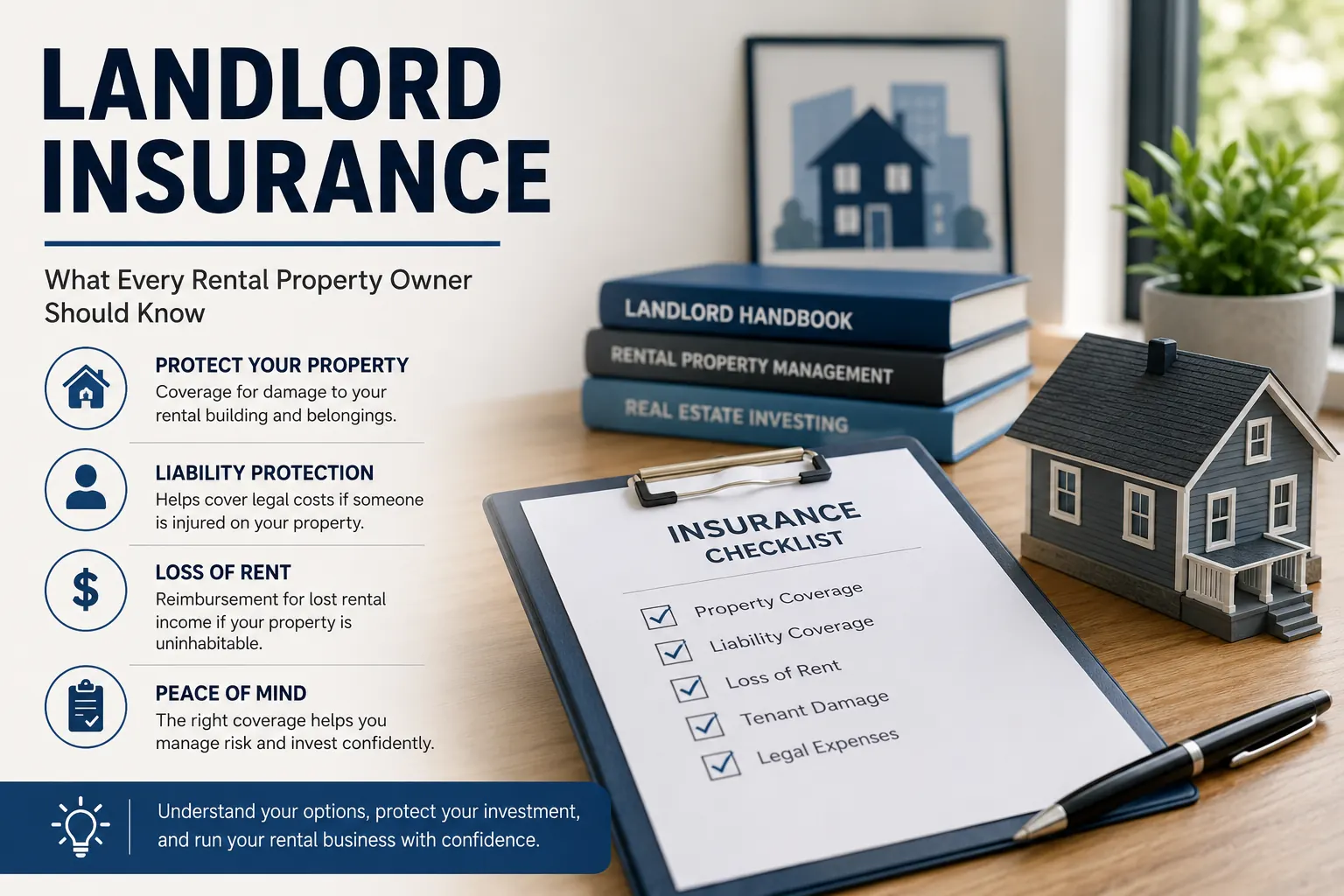
Landlord insurance is a policy for rental property owners that covers property damage, liability claims, and lost rental income from covered events. Unlike homeowners insurance, it is specifically designed for rental properties and helps protect landlords from financial losses related to tenant-occupied homes.
Financial Disclaimer
This article provides general educational information about landlord insurance for informational purposes only. It does not constitute insurance or financial advice. Coverage requirements vary by property type, state, mortgage lender, and individual circumstances. Landlords should work with a licensed insurance agent to determine the right coverage for their specific situation.
Most first-time landlords assume their homeowners insurance covers a rental property. It does not. The moment you begin collecting rent, your insurer can deny claims on the grounds that the property is being used commercially, a purpose your residential policy explicitly excludes. Landlord insurance fills that gap.
This guide covers what landlord insurance covers, what it does not, the different policy types available, how much it costs, what to look for when comparing quotes, and the specific coverage considerations for landlords managing multiple properties or short-term rentals.
What Does Landlord Insurance Cover?
A standard landlord insurance policy has three core coverage components. Most policies include all three, though coverage limits and exclusions vary by insurer and policy.
Dwelling Coverage
Dwelling coverage protects the physical structure of the rental property against covered perils. This includes the building itself, attached structures like garages, and permanent fixtures such as built-in appliances, flooring, and plumbing. Covered perils typically include fire, windstorm, hail, lightning, vandalism, and water damage from burst pipes.
The dwelling coverage limit should reflect the cost to rebuild the property, not its market value. In high-cost states like California, the rebuild cost and market value can diverge significantly. Underinsuring a property is one of the most common and costly landlord insurance mistakes.
Liability Coverage
Liability coverage protects the landlord if a tenant, visitor, or contractor is injured on the rental property and the landlord is found legally responsible. It covers legal defense costs, court judgments, and settlements up to the policy limit.
Standard liability limits on landlord policies typically start at $100,000, but most insurance professionals recommend a minimum of $300,000 for single-family rentals and $1 million for multifamily properties. Landlords with significant assets or multiple properties should consider an umbrella policy on top of the base liability coverage.
Loss of Rental Income Coverage
Loss of rental income coverage, also called fair rental value coverage, pays the landlord the rent they would have collected if the property becomes uninhabitable due to a covered peril. For example, if a fire forces tenants to vacate during repairs, this coverage replaces the lost rental income for the duration of the repair period, typically up to 12 months.
This coverage is only triggered by a covered peril. If tenants simply stop paying rent or abandon the property without a covered damage event, loss of rental income coverage does not apply. That scenario requires a separate rent guarantee insurance policy.
What Landlord Insurance Does Not Cover
Understanding the exclusions is as important as understanding the coverage. Standard landlord policies do not cover:
• Tenant personal property: Tenants are responsible for insuring their own belongings. This is why landlords routinely require tenants to carry renters insurance as a lease condition.
• Routine maintenance and wear: Landlord insurance covers sudden and accidental damage, not gradual deterioration, mechanical breakdown, or maintenance neglect.
• Flood damage: Standard landlord policies exclude flood. Separate flood insurance through the National Flood Insurance Program (NFIP) or a private flood carrier is required for properties in flood-risk areas.
• Earthquake damage: Earthquake is typically excluded from standard policies and requires a separate endorsement or standalone policy, particularly relevant in California and the Pacific Northwest.
• Vacant property: Most landlord policies reduce or suspend coverage if the property is vacant for more than 30 to 60 days. Separate vacant property insurance is needed for properties between tenants for extended periods.
• Short-term rental activity without endorsement: Some standard landlord policies exclude short-term rental activity (Airbnb, Vrbo). If you rent your property short-term, confirm your policy covers this or add a short-term rental endorsement.
• Intentional damage by the landlord: Coverage only applies to accidental and sudden events, not intentional acts.
Landlord Insurance vs. Homeowners Insurance
This is the most important comparison for new landlords to understand. The two policy types are fundamentally different in purpose, despite covering similar structures.
If you rent out a property and your insurer discovers you have been collecting rent, they may deny all claims under a homeowners policy, including claims unrelated to the rental activity. The shift from personal use to rental use is a material change that voids the policy's purpose. Notify your insurer the moment a property transitions to rental use.
Types of Landlord Insurance Policies
DP-1: Basic Form Policy
The most limited and least expensive option. A DP-1 covers only named perils specifically listed in the policy: typically fire, lightning, windstorm, hail, explosion, riot, and vehicle damage. Everything else is excluded. Loss is settled on an actual cash value basis, meaning depreciation is deducted from claims. DP-1 is generally appropriate only for lower-value properties where cost is the primary concern.
DP-2: Broad Form Policy
A DP-2 covers the named perils from DP-1 plus additional covered events: falling objects, weight of ice and snow, accidental water discharge, electrical damage, and appliance freezing. Loss is still settled on an actual cash value basis in most DP-2 policies. Better protection than DP-1 at a moderate cost premium.
DP-3: Special Form Policy
The most comprehensive and most common landlord policy type. A DP-3 covers all perils except those specifically excluded, rather than only covering named perils. This open-peril approach provides significantly broader coverage than DP-1 or DP-2. Loss is typically settled on a replacement cost basis rather than actual cash value, meaning no depreciation deduction on covered claims. For most landlords, a DP-3 is the appropriate baseline.
Policy Recommendation
For the vast majority of residential rental properties, a DP-3 policy with replacement cost coverage is the right starting point. The premium difference over a DP-1 is typically 20-30% but the coverage difference in a major claim can be the difference between full restoration and a significant out-of-pocket gap.
How Much Does Landlord Insurance Cost?
Landlord insurance costs vary significantly by property location, property type, coverage limits, and the insurer. The ranges below reflect US national data and should be treated as starting benchmarks, not fixed figures.
Landlord insurance typically costs 15-25% more than a comparable homeowners policy on the same property, reflecting the higher risk profile of a rental property. According to the Insurance Information Institute, the average landlord policy runs approximately $1,500 per year for a single-family rental, though high-risk states like California and Florida can push premiums significantly higher due to wildfire, hurricane, and climate-related underwriting adjustments.
Insurance Information Institute overview of landlord insurance
Factors That Affect Your Premium
• Location: Properties in hurricane-prone, wildfire-adjacent, or flood-risk areas pay materially higher premiums. In some California and Florida markets, finding coverage at any price has become a challenge.
• Property age and condition: Older properties with dated electrical, plumbing, or roof systems are considered higher risk and priced accordingly. Updating these systems can reduce premiums meaningfully.
• Claim history: Properties with a history of claims are viewed as higher risk. Landlords who file multiple small claims can see significant premium increases at renewal.
• Coverage limits and deductibles: Higher coverage limits increase premiums; higher deductibles reduce them. The right balance depends on your cash reserves and risk tolerance.
• Number of properties: Landlords insuring multiple properties with the same carrier often qualify for portfolio discounts. A blanket policy covering multiple units can also reduce per-unit costs.
• Tenant screening standards: Some insurers offer discounts to landlords who use documented tenant screening processes, including credit and background checks. Better tenant quality reduces loss claims.
Landlord Rent Guarantee Insurance
Rent guarantee insurance, also called rent protection insurance, pays the landlord when a tenant defaults on rent payments. It is separate from and in addition to standard landlord insurance.
How it works: If a tenant stops paying rent, the policy pays the landlord a monthly benefit (typically up to 75-80% of normal rent) for a defined period, usually 6-12 months, while the landlord pursues eviction. Some policies also cover legal costs for eviction proceedings.
• Who needs it: Landlords who cannot absorb several months of missed rent while an eviction proceeds. In states with slow eviction timelines, a lengthy non-payment period before a court order can represent a significant financial exposure.
• Typical cost: Rent guarantee insurance typically costs 2-5% of annual rental income. A landlord earning $2,000/month in rent would pay approximately $480-$1,200 per year for coverage.
• Qualification requirements: Most carriers require a minimum credit score for the tenant and a signed lease with a defined term. Some require landlords to demonstrate they conducted a background check. Policies typically have a waiting period of 30-90 days before a claim can be filed.
• Limitations: Rent guarantee insurance does not cover damage caused by non-paying tenants or legal costs beyond the policy limit. It also typically excludes vacancies between tenants.
Umbrella Insurance for Rental Property
An umbrella policy provides additional liability coverage above and beyond the limits of a standard landlord policy. For landlords with significant assets or multiple rental properties, an umbrella policy is one of the most cost-effective forms of protection available.
A $1 million personal umbrella policy typically costs $150-$300 per year, a relatively small premium for substantially increased protection. The umbrella kicks in when the underlying landlord policy's liability limit is exhausted.
Landlords who should consider umbrella coverage:
• Those owning three or more rental units
• Those with significant personal assets that could be targeted in a lawsuit
• Those managing high-traffic properties such as multifamily buildings with pools, playgrounds, or parking structures
• Those renting in litigation-heavy markets such as California, Florida, and New York
Landlord Insurance for Multiple Properties
Managing insurance across a portfolio of rental properties introduces both complexity and opportunity. Search interest in 'landlord insurance multiple properties' grew 80% in the past three months, driven by landlords scaling their portfolios and looking for more efficient coverage structures.
Portfolio or Blanket Policies
Some insurers offer portfolio policies that cover multiple properties under a single policy with one renewal date, one deductible structure, and consolidated billing. This simplifies administration and often reduces per-unit premium costs compared to separate policies for each property.
Commercial Landlord Insurance
Landlords with five or more units, or those managing properties through an LLC or corporation, may be better served by a commercial landlord policy rather than individual residential policies. Commercial policies are underwritten differently and offer higher coverage limits, broader protection, and more flexible terms for professional property management operations.
LLC and Business Entity Considerations
Many landlords hold rental properties in LLCs for liability protection. When a property is held in an LLC, the insurance policy should reflect the LLC as the named insured, not the individual landlord personally. Mismatches between policy ownership and property ownership can create coverage gaps that only become apparent at claim time.
Short-Term Rental Landlord Insurance
Standard landlord policies were written for long-term residential tenancies of six months or more. Short-term rental activity through platforms like Airbnb, Vrbo, and others involves a different risk profile: higher occupancy turnover, variable guest behavior, and the commercial nature of hospitality-style rentals.
Short-term rental landlord insurance grew 29% year-over-year in search volume, tracking with continued growth in STR activity. Options for coverage include:
• Short-term rental endorsement: Some insurers allow landlords to add a short-term rental endorsement to an existing landlord policy for an additional premium. This is the simplest approach if your insurer offers it.
• Platform coverage: Airbnb's AirCover for Hosts program provides up to $3 million in damage protection and $1 million in liability coverage for losses during a guest stay. This supplements but does not replace a dedicated landlord policy.
• Specialty STR policies: Several insurers now offer standalone short-term rental policies designed specifically for hosts, with coverage that bridges the gap between homeowners coverage and traditional landlord coverage.
• Hybrid policies: Landlords who rent the same property both long-term and short-term at different times of year may need a hybrid policy that covers both use cases.
What to Look for When Comparing Landlord Insurance Quotes
Getting multiple landlord insurance quotes is the best way to find appropriate coverage at a competitive price. When comparing, look beyond the premium to the coverage details.
• Replacement cost vs. actual cash value: Replacement cost pays to rebuild or replace at current prices. Actual cash value deducts depreciation. The premium difference is typically 10-20% but the claims difference can be substantial on older properties.
• Loss of rental income duration: Most policies cover 12 months of lost rental income. Some cover less. Confirm this period matches the realistic rebuild timeline for your property type and market.
• Liability coverage adequacy: Confirm the policy's liability limit is adequate for your risk profile. A $100,000 limit may be insufficient for a serious injury claim. $300,000 to $1 million is a more appropriate starting point.
• Exclusion review: Read the exclusions carefully. Flood, earthquake, mold, and vacant property exclusions are common and can represent significant gaps depending on your property's location and risk profile.
• Deductible structure: Some policies have separate deductibles for different perils (such as a higher wind/hail deductible in storm-prone areas). Understand the full deductible structure before selecting a policy.
• Claims handling reputation: Premium cost matters, but so does the insurer's ability to pay and process claims efficiently. The National Association of Insurance Commissioners (NAIC) publishes complaint ratio data for licensed insurers that can help evaluate carrier quality.
NAIC landlord insurance consumer guide
Do Landlords Have to Require Tenants to Have Renters Insurance?
Landlords are not legally required to mandate renters insurance in most states, but doing so as a lease condition is strongly recommended. Renters insurance protects the tenant's personal property and provides liability coverage for damage caused by the tenant — both of which are excluded from the landlord's policy.
Common reasons landlords require renters insurance:
• It reduces tenant disputes over personal property losses
• It provides a liability backstop if the tenant causes damage to neighboring units
• It signals that the tenant is financially responsible and has planned for contingencies
• Some lenders require it as a condition of the landlord's mortgage on the rental property
When requiring renters insurance, include the requirement in the lease, specify the minimum coverage amount (typically $100,000 in liability), and ask to be named as an additional interested party on the policy so you receive notification if the policy lapses.
For a full framework on lease terms and what to include, see the rental agreements and lease terms guide.
Related Guides for Landlords
• Landlord Duties and Tenant Responsibilities
• Rental Agreements and Lease Terms Guide
• How to Screen Tenants: 6 Essential Steps
• Rental Security Deposit Guide
• 22 Tips for First-Time Rental Property Owners
• Essential Tenant Rights and Rental Owner Obligations
Managing Your Rental Portfolio
Keeping track of insurance renewals, maintenance requests, tenant screening documentation, and lease records across multiple properties requires organized systems. Purpose-built rental management tools centralize the administrative workload so nothing slips between cycles.
Explore rental management features and pricing, or visit ManageCasa.com to learn more.
Frequently Asked Questions
What is a Landlord Insurance?
Landlord insurance is a policy for rental property owners that covers property damage, liability claims, and lost rental income from covered events. Unlike homeowners insurance, it is specifically designed for rental properties and helps protect landlords from financial losses related to tenant-occupied homes.
What does landlord insurance cover?
Landlord insurance typically covers property damage from covered events, liability claims involving tenants or visitors, and loss of rental income when a covered incident makes the property temporarily uninhabitable. Most policies exclude flood damage, earthquakes, normal wear and tear, and tenant personal belongings.
How much does landlord insurance cost?
Landlord insurance typically costs between $800 and $3,000 per year, with a national average around $1,500. Premiums vary based on location, property condition, coverage limits, deductible amounts, and exposure to risks such as hurricanes, wildfires, flooding, or other natural disasters.
Is landlord insurance required?
Landlord insurance is generally not required by state law, but mortgage lenders often require coverage for rental properties. Even when optional, it protects landlords from potentially significant financial losses caused by property damage, liability claims, and lost rental income following covered events.
What is the difference between landlord insurance and homeowners insurance?
Homeowners insurance is designed for owner-occupied residences and personal belongings. Landlord insurance is intended for rental properties and typically includes liability protection and loss-of-rental-income coverage. Standard homeowners policies may deny claims if a property is rented without the appropriate landlord coverage.

Content Writer
Dann is a real estate and property management content strategist specializing in HOA operations, financial management, and community governance. He works closely with industry professionals to produce accurate, practical guidance for property managers and HOA boards.