




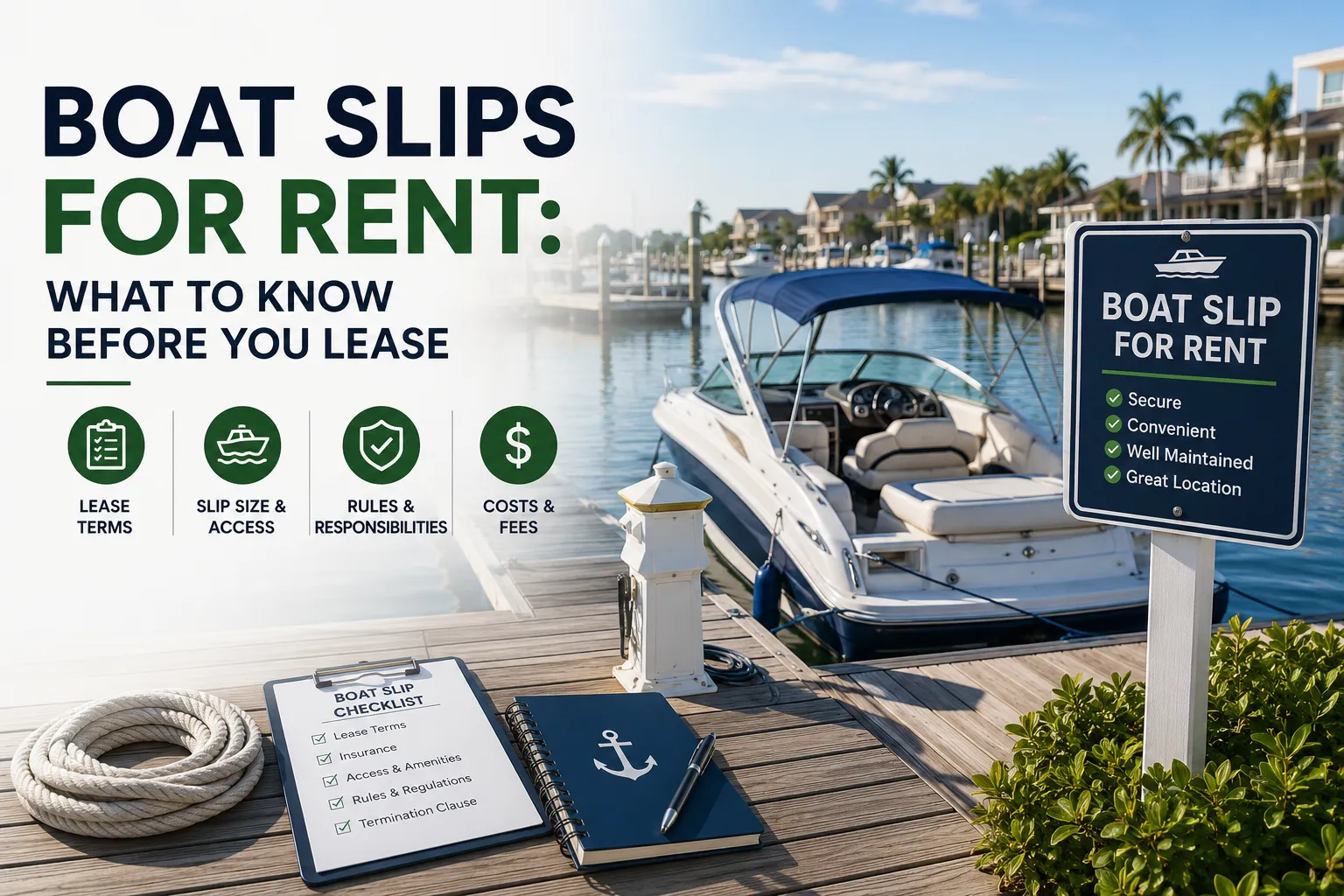
What is a boat slip for rent?
A boat slip for rent is a docking space leased from a marina or private slip owner, available on a transient, month-to-month, or annual basis. Rental terms, pricing, and included amenities vary widely, so understanding slip types and lease structures before committing helps both boaters and marina operators avoid surprises.
An estimated 85 million Americans go boating every year, and most of them do not own waterfront property, which means finding a place to keep the boat is its own project. Whether you are searching for your first slip or a marina operator trying to understand what boaters actually look for, the rental process has more moving parts than it first appears: slip type, lease length, what is actually included in the rate, and how availability works in a market where good slips do not sit open for long.
This guide walks through the types of slips available for rent, where to find them, what to check in a rental agreement, and how lease length affects both cost and availability. If you are trying to figure out what a slip actually costs before you start shopping, our boat slip cost guide breaks down pricing by vessel size and region in more detail.
Types of Boat Slips for Rent
Not all rental slips are the same, and the right type depends on how you use your boat as much as what is available nearby.
- Wet slips: the most common type, a docking space in the water where the boat stays tied up between uses. Best for boaters who use their vessel regularly.
- Dry storage: the boat is stored on land, typically in a rack system, and launched by marina staff when needed. Lower cost, but less spontaneous access.
- Covered slips: a wet slip with a roof structure overhead, protecting the boat from sun and weather at a premium over uncovered slips.
- Uncovered slips: the standard open-air wet slip, the most widely available and typically the lowest-cost wet slip option.
- Liveaboard slips: wet slips specifically permitted for live-aboard use, which usually carry additional fees and are subject to marina-specific occupancy rules.
- Transient slips: short-term docking, from overnight to a few weeks, aimed at boaters passing through rather than keeping a boat at one marina long-term.
How to Find Boat Slips for Rent Near You
Finding an open slip usually takes more than one approach, especially in marinas with waitlists.
- Contact marinas directly. Many marinas keep waitlists that never make it onto a public website, so a phone call or in-person visit often surfaces availability that online listings miss.
- Check municipal and harbor authority listings. Publicly owned marinas frequently post current availability and rate sheets as official documents, which tend to be more accurate than third-party aggregators.
- Use boater-focused rental platforms and marina directories. These are useful for comparing multiple marinas at once, though listed availability can lag behind what a marina actually has open.
- Ask other boaters. Slip openings, especially private or by-owner rentals, often circulate within local boating communities before they are listed anywhere public.
What to Look for in a Boat Slip Rental Agreement
A slip rental agreement covers more than just the monthly rate, and the details matter once you are actually docked.
- What is included: confirm whether electricity, water, pump-out service, and parking are part of the base rate or billed separately.
- Length of term and renewal terms: understand whether the lease auto-renews, what notice is required to leave, and whether the marina can raise rates mid-term.
- Insurance requirements: most marinas require proof of liability insurance on your vessel before you can dock, so confirm coverage minimums before signing.
- Rules on vessel size, type, and use: some marinas restrict liveaboard use, commercial activity, or vessel age and condition, which can disqualify a boat after the fact if not checked upfront.
- Cancellation and refund policy: ask what happens if you need to leave early, particularly for annual contracts paid in advance.
Month-to-Month vs. Annual Slip Leases
The choice between a month-to-month and an annual slip lease comes down to how often you use your boat and how much certainty you want.
Month-to-month leases offer flexibility. You are not locked into a marina for a full season, which matters if your plans might change or you want to try a marina before committing longer term. The tradeoff is less price stability and, in high-demand markets, the real risk that your slip is not available to renew if someone signs an annual contract for it.
Annual leases typically cost less per month than paying month-to-month for the same period, and they guarantee slip access for the full term, which matters most in marinas with waitlists. The tradeoff is less flexibility if your boating plans change mid-year, and most annual contracts require payment upfront or in structured installments rather than monthly billing.
In markets where slips are scarce, an annual lease is often the only realistic way to secure consistent access at all. In markets with more available inventory, month-to-month gives boaters more room to shop around and adjust as needed.
For Marina Operators: Filling Slips Faster
Boating participation has stayed resilient even as new boat sales softened over the past two years, which means demand for slip space remains steady even in a mixed economic environment. For marina operators, the challenge is less about demand and more about visibility, process, and speed. A few practices consistently shorten vacancy periods:
- List availability where boaters are actually searching, not just on your own website. Slips that only appear in a marina's internal system miss the boaters actively comparing options online.
- Make the inquiry-to-lease process fast. A boater who has to wait days for a callback often books elsewhere in the meantime, especially during peak season.
- Keep a waitlist and treat it as active inventory. When a slip becomes available, the fastest response usually wins the booking, so a waitlist that is not actively managed is a missed opportunity.
- Be upfront about total cost. Boaters who get surprised by utility charges or add-on fees after committing tend to churn faster, which recreates the vacancy problem you just solved.
- Consider a mix of transient and long-term inventory. Even marinas built around annual leases often benefit from holding a small number of slips open for transient bookings, which capture boaters passing through and can convert into longer-term tenants.
Related Guides
• How Much Does a Boat Slip Cost?
For Marina Operators
Filling slips faster starts with visibility and a fast response process, and the right system makes both easier. ManageCasa's marina slip management tools help operators track availability, manage waitlists, and handle transient bookings in one place. See plans and pricing, or visit ManageCasa to see how it fits a marina operation.
Frequently Asked Questions
How much does it cost to rent a boat slip?
Boat slip rental costs typically range from $10 to $35 per foot per month at inland and mid-tier coastal marinas, and $50 to $100 or more per foot monthly at premium waterfront locations. Cost depends heavily on vessel size, region, and whether the slip is covered or includes liveaboard access.
Can I rent a boat slip month to month?
Yes, many marinas offer month-to-month slip rentals, though availability is often more limited than annual contracts, especially in high-demand markets where annual tenants get priority renewal.
What is included when you rent a boat slip?
A standard slip rental typically includes dock access and basic marina facility use. Electricity, water, pump-out service, and parking are frequently billed separately, so it is worth confirming exactly what is bundled before signing.
Is it cheaper to rent a boat slip privately or through a marina?
Private, by-owner slip rentals can sometimes undercut marina rates, but they typically come without the amenities, security, and maintenance standards a managed marina provides. The right choice depends on how much you value convenience and services versus a lower price.
How far in advance should I look for a boat slip rental?
In high-demand coastal markets, it is common to join a waitlist months, or in some cases over a year, before a slip becomes available. In markets with more available inventory, a few weeks of lead time is often enough.

Content Writer
Patrick Bohan is a content strategist focused on property management technology, HOA operations, and real estate. A Cornell graduate, he began his career at UBS covering housing markets, homeownership policy, and financial regulation — experience that now informs his research-driven approach to proptech content. Today he bridges the gap between software teams and the practitioners who use them, producing practical resources on community associations, rental operations, and accounting workflows for property managers.